 +91-9960577713
 info@padhailikhai.co.in
 Pay Fees Online

BTech in Electronics & Communication Engineering from BTU Course Overview
BTech in Electronics & Communication Engineering provides in-depth learning of electronic circuits, communication principles, and signal processing techniques. The course blends core electronics with modern communication technologies such as wireless systems, embedded devices, and networking fundamentals, creating a comprehensive educational experience. Students gain hands-on exposure through extensive lab work, simulations, and practical projects that reinforce theoretical knowledge. The curriculum meticulously focuses on both the hardware and software aspects of communication systems, which is vital in today’s technology-driven world. Emphasis is placed on real-world telecom applications and electronic product development, ensuring that this program effectively prepares learners for dynamic and challenging roles in the rapidly evolving electronics and telecom sectors.
Eligibility
Candidates must have completed 10+2 with Physics, Chemistry, and Mathematics from a recognized board.
Bir Tikendrajit University Advantages
- UGC Recognized State Private University
Established under Manipur State Act and recognized by UGC for valid degree programs. - Diverse Professional Programs
Offers career-oriented courses across management, IT, education, and humanities. - Student-Centric Learning Approach
Focus on accessible education with flexible learning support for students.



BTech in Electronics & Communication Engineering from BTU Course Syllabus
1st Semester
- Engineering Mathematics – I
- Engineering Physics
- Basic Electrical Engineering
- English Language and Communication Skills
- Engineering Graphics & Design
2nd Semester
- Engineering Mathematics – II
- Introduction to Programming
- Basic Electronics Engineering
- Workshop Practice
- Programming Lab
- Engineering Chemistry
3rd Semester
- Discrete Mathematics
- Electronics Devices and Circuits
- Electronic Measurement and Instrumentation
- Circuit Theory and Network Analysis
- Electronic Devices and Circuits Lab
- Electronic Measurement and Instrumentation Lab
4th Semester
- Principles and Practices of Management
- Electromagnetic Wave and Transmission Line
- Signal and System
- Analog and Linear Integrated Circuit
- Digital System Design
- Signal and System Lab
- Analog and Linear Integrated Circuit Lab
- Digital System Design Lab
5th Semester
- Control System Engineering
- Analog Communication System
- Antenna and Wave Propagation
- Digital Communication and System
- Analog and Digital Communication Lab
- Antenna and Wave Propagation Lab
- Electronic Circuit Design Workshop
6th Semester
- Managerial Economics
- Optical Fiber Communication
- Power Electronics
- Microcontroller and Embedded System
- Microwave Theory and Techniques
- Microcontroller and Embedded System Lab
- Microwave Theory and Techniques Lab
- Optical Fiber Communication Lab
7th Semester
- VLSI Design and Technology
- Digital Signal Processing
- Biomedical Electronics
- Mobile Communication and Network
- VLSI Design and Technology Lab
- Digital Signal Processing Lab
8th Semester
- Satellite Communication
- Nanoelectronics
- Project
BTech in Electronics & Communication Engineering from BTU Course Fee Structure
We offer flexible payment options that let students pay the program fee in convenient installments.
Indian Nationals
Installment Plan
INR 80,000 X 4
Full Course Fee
INR 3,20,000
International Students
Installment Plan
INR 1,60,000 X 4
Full Course Fee
INR 6,40,000
Important Note:
The above fee structure is applicable for the current academic session. Fees once paid are non-refundable as per university guidelines. Students are advised to confirm the latest fee details with the admission counsellor before enrollment.
Admission Process
Complete your admission by following the simple steps below.

Application
Submit the enquiry form. Our admission counsellor will contact you for further guidance.

Document Submission
Share the required academic documents, ID proof, latest photograph and signature.

Fee Payment
Pay the applicable fee for the first year or full course as guided by the counsellor.

Admission Confirmation
The university will evaluate your documents to confirm your admission.
Get a Recognized Degree

Globally Accepted
Graduate with UGC-entitled and internationally accepted online degrees.

Equivalent to a Regular Program
Enjoy the same academic standards, credibility, and recognition as a traditional classroom degree.

Awarded by the University
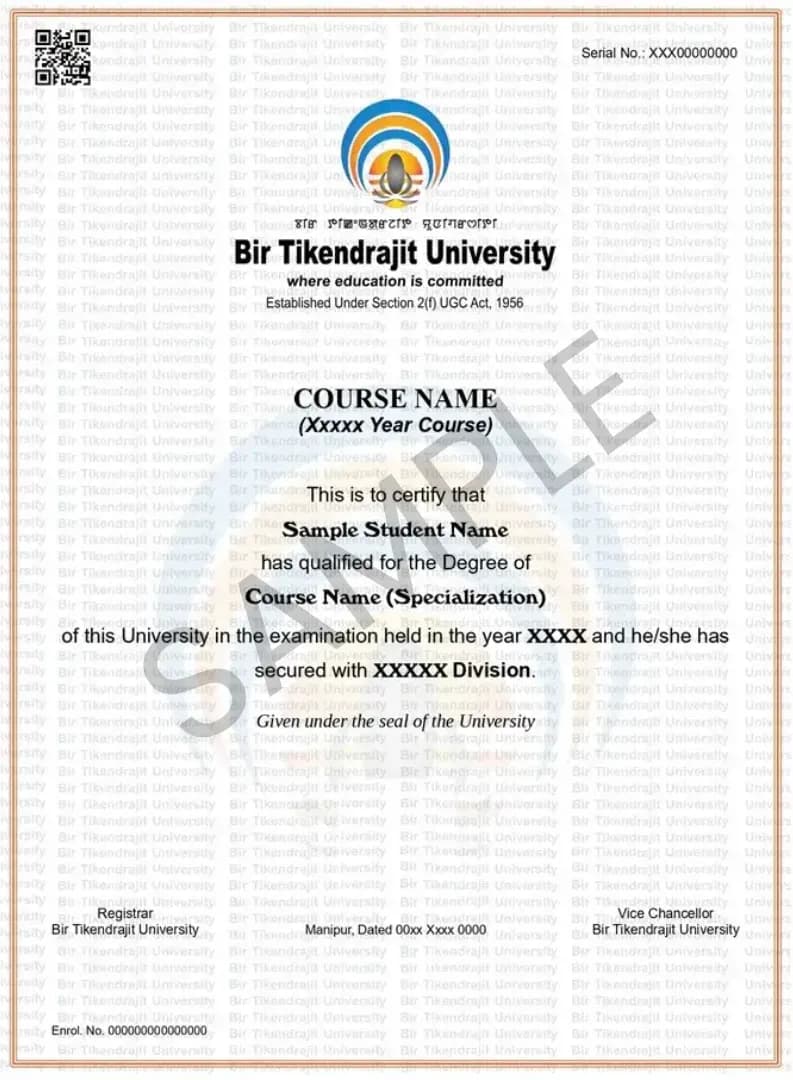
Receive your final degree certificate directly from the university upon successful completion of the program.
BTech in Electronics & Communication Engineering from BTU Career Prospects
Graduates can pursue roles in telecom companies, electronics manufacturing firms, and networking organizations in technical and design capacities.
Program Outcomes
Students develop strong knowledge of analog and digital electronics, communication systems, and embedded technologies. They learn to design, analyse, and troubleshoot electronic communication equipment. The program builds practical and analytical skills required for modern telecom and electronics applications.
Career Pathways
- Communication Engineer
- Embedded Systems Engineer
- RF Engineer
- Network Engineer
- Electronics Design Engineer
- Telecom Support Engineer
- Field Test Engineer
Industries
- Telecommunications
- Consumer Electronics
- Semiconductor Industry
- Networking Companies
- Automation Firms
- Electronics Manufacturing
Frequently Asked Questions (FAQs)
Students who have completed 10+2 with Physics, Chemistry, and Mathematics from a recognized board are eligible for admission.
The course follows semester mode and is completed over 48 months.
Graduates can work in telecom industries, embedded systems, networking, communication technology, and electronics manufacturing sectors.
Yes, the field offers strong opportunities in telecommunications, automation, electronics, and IT industries worldwide.
Bir Tikendrajit University provides technical education focused on communication systems, electronics, and emerging technologies.
Yes, graduates can work in telecom, networking, satellite communication, and related technical sectors.


