 +91-9960577713
 info@padhailikhai.co.in
 Pay Fees Online

BTech in Electrical & Electronics Engineering from BTU Course Overview
BTech in Electrical & Electronics Engineering is a four-year undergraduate program that focuses on various aspects of electrical circuits, power generation, control systems, and electronic components. Students gain a solid understanding of these fundamental areas, learning how to design, analyse, and implement electrical systems in real-world applications. The program’s semester format effectively integrates theoretical knowledge with hands-on experiences, including laboratory and simulation practices. This combination ensures that graduates are well-prepared for the challenges of the industry. By engaging in practical projects, students develop problem-solving skills and the ability to work collaboratively in teams, which are essential in their future careers.
Eligibility
Candidates who have completed 10+2 with PCM from a recognized board can apply.
Bir Tikendrajit University Advantages
- UGC Recognized State Private University
Established under Manipur State Act and recognized by UGC for valid degree programs. - Diverse Professional Programs
Offers career-oriented courses across management, IT, education, and humanities. - Student-Centric Learning Approach
Focus on accessible education with flexible learning support for students.


BTech in Electrical & Electronics Engineering from BTU Course Syllabus
1st Semester
- Matrices and Calculus
- Engineering Chemistry
- C Programming and Data Structures
- Electrical Circuit Analysis – I
- Computer Aided Engineering Graphics
- Elements of Electrical and Electronics Engineering
- Engineering Chemistry Lab
- C Programming and Data Structures Lab
2nd Semester
- Ordinary Differential Equations and Vector Calculus
- Applied Physics
- Engineering Workshop
- English for Skill Enhancement
- Electrical Circuit Analysis – II
- Applied Python Programming Lab
- Applied Physics Lab
- English Language and Communication Skills Lab
- Electrical Circuit Analysis Lab
- Environmental Science
3rd Semester
- Numerical Methods and Complex variables
- Electrical Machines – I
- Power System – I
- Analog Electronic Circuits
- Electro Magnetic Fields
- Electrical Machines Lab – I
- Analog Electronic Circuits Lab
- Electrical Simulation Tools Lab
- Gender Sensitization Lab
4th Semester
- Solid Mechanics & Hydraulic Machines
- Measurements and Instrumentation
- Electrical Machines – II
- Digital Electronics
- Power System – II
- Digital Electronics Lab
- Measurements and Instrumentation Lab
- Electrical Machines Lab – II
- Constitution of India
5th Semester
- Power Electronics
- Control Systems
- Microprocessors & Microcontrollers
- Elective-I (IoT Applications in Electrical Engineering / High Voltage Engineering)
- Business Economics and Financial Analysis
- Microprocessors & Microcontrollers Lab
- Power Electronics Lab
- Advanced English Communication Skills Lab
- Intellectual Property Rights
6th Semester
- OE-I (Renewable Energy Sources / Fundamental of Electric Vehicles)
- Elective-II (Cyber-Physical Systems / Power Semiconductor Drives)
- Digital Signal Processing
- Power System Protection
- Power System Operation and Control
- Power System Lab
- Control Systems Lab
- Digital Signal Processing Lab
- Environmental Science
7th Semester
- Power Electronic Applications to Renewable Energy Systems
- OE-II (Utilization of Electric Energy / Energy Storage Systems)
- Elective-III (Mobile Application Development / Signals and Systems)
- Elective-IV (HVDC Transmission / Power System Reliability)
- Fundamentals of Management for Engineers
- Simulation of Renewable Energy Systems Lab
8th Semester
- OE-III (Charging Infrastructure for Electric Vehicles / Reliability Engineering)
- Elective-V (Power Quality & FACTS / Solar Power Batteries)
- Elective-VI (Smart Grid Technologies / Electrical Distribution Systems)
- Project
BTech in Electrical & Electronics Engineering from BTU Course Fee Structure
We offer flexible payment options that let students pay the program fee in convenient installments.
Indian Nationals
Installment Plan
INR 80,000 X 4
Full Course Fee
INR 3,20,000
International Students
Installment Plan
INR 1,60,000 X 4
Full Course Fee
INR 6,40,000
Important Note:
The above fee structure is applicable for the current academic session. Fees once paid are non-refundable as per university guidelines. Students are advised to confirm the latest fee details with the admission counsellor before enrollment.
Admission Process
Complete your admission by following the simple steps below.

Application
Submit the enquiry form. Our admission counsellor will contact you for further guidance.

Document Submission
Share the required academic documents, ID proof, latest photograph and signature.

Fee Payment
Pay the applicable fee for the first year or full course as guided by the counsellor.

Admission Confirmation
The university will evaluate your documents to confirm your admission.
Get a Recognized Degree

Globally Accepted
Graduate with UGC-entitled and internationally accepted online degrees.

Equivalent to a Regular Program
Enjoy the same academic standards, credibility, and recognition as a traditional classroom degree.

Awarded by the University
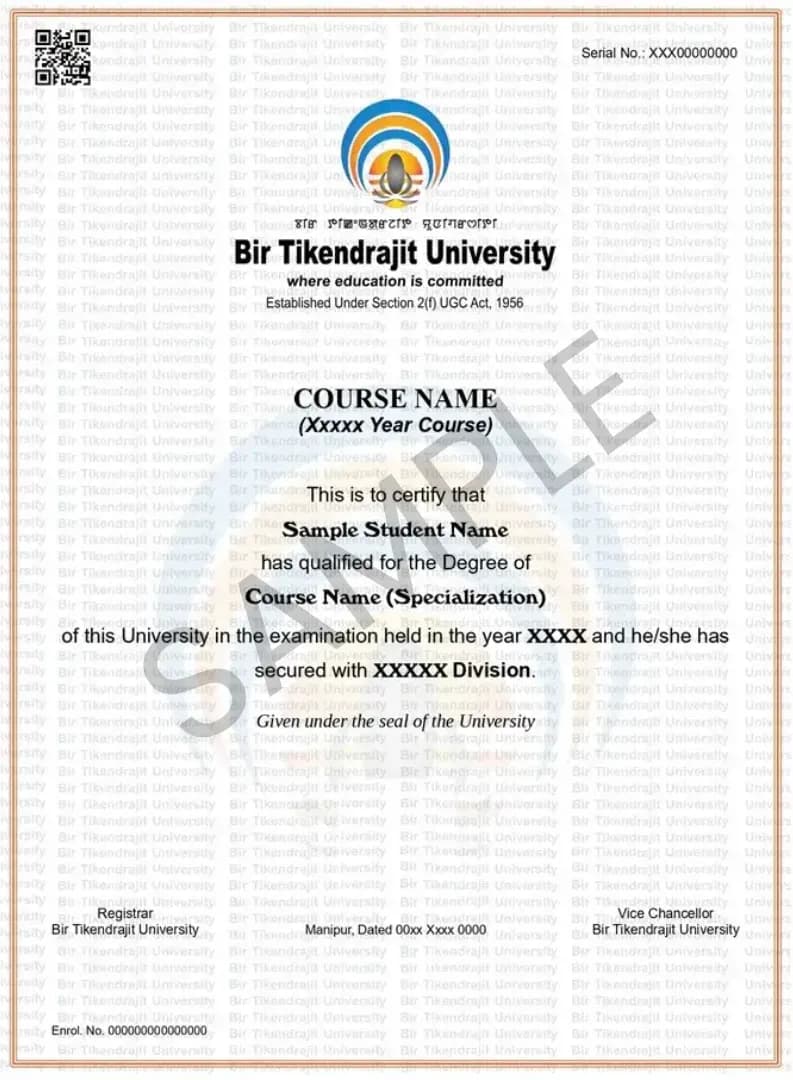
Receive your final degree certificate directly from the university upon successful completion of the program.
BTech in Electrical & Electronics Engineering from BTU Career Prospects
Students can enter roles in power plants, electrical maintenance units, electronics firms, and automation sectors.
Program Outcomes
Learners understand electrical systems, electronic devices, and control mechanisms through practical exposure. The program builds troubleshooting skills and technical competence for handling real electrical and electronic systems.
Career Pathways
- Electrical Engineer
- Electronics Technician
- Maintenance Engineer
- Control Systems Assistant
- Power Plant Technician
Industries
- Power Generation Units
- Electrical Equipment Manufacturing
- Automation Industry
- Electronics Companies
- Maintenance Services
Frequently Asked Questions (FAQs)
Candidates who have completed 10+2 with PCM subjects are eligible for admission.
The course follows semester mode and is completed over 48 months.
Graduates can work in power systems, automation, electronics manufacturing, energy sectors, and industrial engineering roles.
Yes, the field offers opportunities in energy, electronics, automation, and electrical infrastructure industries.
The university provides technical education focused on electrical systems, electronics, and practical engineering applications.
Yes, graduates can explore careers in solar energy, automation, and power generation industries.


